

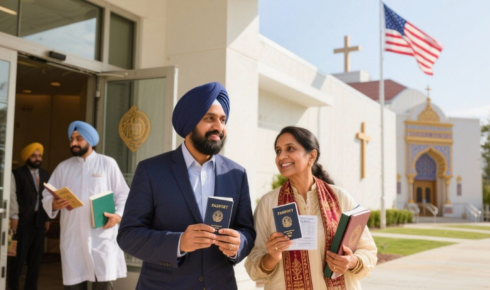
For ministers, missionaries, and other religious professionals working in the United States, the R-1 visa provides a lawful way to serve religious communities. However, many religious workers eventually ask a crucial question: how can you go from an R1 visa to Green Card?
The transition from R1 visa to Green Card is not automatic, but it is absolutely possible with the right strategy, timing, and documentation. This guide explains how the process works, who qualifies, and what religious workers should consider when planning permanent residency in the U.S.
What Is the R-1 Visa?
Before discussing the path from r1 visa to green card, it’s important to understand the R-1 visa itself.
The R-1 visa is a non-immigrant visa for religious workers who:
Are members of a recognized religious denomination
Have been part of that denomination for at least two years
Are coming to the U.S. to work in a religious vocation or occupation
Are sponsored by a bona fide U.S. religious organization
Typical R-1 roles include:
Ministers, pastors, priests, rabbis, imams
Missionaries
Religious instructors
Liturgical workers
Certain religious administrators
The R-1 visa is initially granted for up to 30 months, with a maximum total stay of 5 years.
Can You Go from R1 Visa to Green Card?
Yes. The transition from r1 visa to green card is most commonly done through the EB-4 Special Immigrant Religious Worker category.
While the R-1 visa is temporary, EB-4 is an immigrant visa that leads directly to lawful permanent residence.
Importantly:
The R-1 visa itself does not convert automatically into a Green Card
A separate immigrant petition must be filed
Timing and compliance with R-1 rules are critical
The Main Path: EB-4 Religious Worker Green Card
The EB-4 Religious Worker category is the primary route from r1 visa to green card.
Who Qualifies for EB-4?
To qualify, the applicant must:
Have worked in a religious vocation or occupation
Be a member of the same religious denomination for at least two years
Have been employed full-time by a qualifying religious organization
Intend to continue religious work permanently in the U.S.
Both ministers and non-minister religious workers may qualify, although non-minister categories are subject to additional scrutiny and, at times, legislative extensions.
How the R1 to Green Card Process Works
The typical process from r1 visa to green card includes the following steps:
1. Form I-360 (Immigrant Petition)
The U.S. religious organization files Form I-360 on behalf of the religious worker. r1 visa to green card This petition establishes eligibility for EB-4 classification.
USCIS will closely examine:
The legitimacy of the religious organization
The worker’s role and duties
Compensation arrangements
Prior religious experience
Compliance with R-1 visa conditions
2. Adjustment of Status or Consular Processing
Once the I-360 is approved and a visa number is available, the applicant proceeds with either:
Adjustment of Status (AOS) if already in the U.S., or
Consular processing if outside the U.S.
Adjustment of Status allows the applicant to remain in the U.S. while the Green Card is processed.
3. Green Card Approval
After final approval, the applicant becomes a lawful permanent resident.
This completes the transition from r1 visa to green card.
Timing Considerations and Visa Availability
One of the most important aspects of the r1 visa to green card strategy is timing.
Key points:
R-1 status is limited to 5 total years
The EB-4 category is subject to annual numerical limits
Visa bulletin backlogs may apply depending on the applicant’s country of birth
Filing the I-360 early enough is critical to avoid gaps in status or forced departure from the U.S.
Maintaining Status While Applying
While pursuing a Green Card, R-1 holders must:
Continue working only for the sponsoring religious organization
Maintain full-time religious employment
Avoid unauthorized work
Remain compliant with visa conditions
Violations during R-1 status can jeopardize both the current visa and the Green Card application.
R1 Visa to Green Card Through Other Paths
In some cases, religious workers may qualify for alternative Green Card paths, including:
Marriage to a U.S. citizen
Employment-based Green Cards (EB-2 or EB-3) if secular qualifications exist
Asylum or humanitarian relief (rare and fact-specific)
However, for most religious professionals, EB-4 remains the most direct and appropriate route from r1 visa to green card.
Common Challenges in R1 to Green Card Cases
USCIS applies heightened scrutiny to religious worker cases. Common issues include:
Questions about compensation (salaried vs. supported roles)
Inadequate documentation of religious duties
Concerns about the legitimacy of the sponsoring organization
Gaps in prior religious experience
Site visits and audits
Because of this, documentation quality and consistency are critical.
Why Legal Guidance Matters
The transition from r1 visa to green card involves complex eligibility rules, strict documentation standards, and timing risks.
An experienced immigration attorney can:
Evaluate EB-4 eligibility early
Coordinate R-1 extensions with Green Card timing
Prepare strong I-360 evidence
Respond to RFEs and site visits
Prevent status gaps or violations
For religious workers and organizations, proper legal planning protects both the individual and the institution.
Final Thoughts: Planning the R1 Visa to Green Card Journey
The path from r1 visa to green card is well-established but requires careful planning, compliance, and documentation. Religious workers who intend to remain in the United States long-term should think strategically from the beginning of their R-1 status.
By understanding the EB-4 process, monitoring visa availability, and maintaining lawful status, religious professionals can successfully transition from temporary service to permanent residency—continuing their mission in the U.S. with long-term stability.
For those serving faith communities across the country, the Green Card is not just an immigration benefit—it’s the foundation for a lasting vocation.